Curio (noun) a rare, unusual, or intriguing object
Showing posts with label nonfiction. Show all posts

Thursday, October 5, 2023

"The Managerial Revolution"

Not a corporate-manager-type book,
despite the prominent pyramid graphic

Political theorist James Burnham published "The Managerial Revolution" in 1941 in the shadow of a depression and world war.1  He observed that capitalism had recently had a bad run and appeared to be in an unstoppable decline, but saw little evidence that it was being replaced by socialism. In fact, socialism itself, as practiced by Russia, appeared to be morphing into something quite different from its ideals. Stalin's five-year plans, European fascism, and Roosevelt's New Deal seemed to point to a different way of organizing societies and economies around governmental planning. A new class of official, the Manager, would hold power in the coming regimes.

Monday, August 21, 2023

"Anabasis"

I read the Henry Graham
Dakyns translation


"Anabasis" – sometimes translated as "The March of the Ten Thousand" – is Xenophon's autobiographical account of the tribulations of an army of Greek mercenaries hired by Cyrus the Younger to fight against his brother, Achaemenid king Artaxerxes II. Cyrus is cut down by a javelin in the Battle of Cunaxa, and the Greeks are left stranded and surrounded by enemies with no supplies, shelter, or even pay1.

Monday, May 22, 2023

"Waking Up"


That face looks like clouds.

"Waking Up" was a book group read by proxy: I added it to my list after one of the participants in our discussion of "Zen Mind, Buddhist Mind" recommended it. Author Sam Harris presents spirituality as a psychological need distinct from religious belief and its associated rituals, a search for meaning outside the mundane.

Monday, February 27, 2023

"Immune"


Not so mysterious after reading this book

"Immune" is a book about, well, the immune system, created by the head writer of Kurzgesagt. They animate some of my favorite science videos on the internet, so this book was a day one buy for me.

Monday, November 21, 2022

"The Elements of Computing Systems"


Not as intimidating as it sounds.

As a kid, I always liked museums: paintings, sculptures, dinosaur fossils, natural history: they were all fun, and science museums were my favorite. "The Elements of Computing Systems" (ECS) is a bit like a science museum in a book, and in conjunction with the author's free online class is also one of the best courses I've ever taken.

Monday, November 7, 2022

Art Spiegelman on "Maus"


A few times each year, the Chicago Public Library chooses a book reflecting some societal theme, sets up programming and events, and presumably procures a bunch of extra copies. This season's pick is Art Spiegelman's "Maus," a graphic novel depicting his father's experiences during the Holocaust. I saw Spiegelman speak last week in Chicago1 about the case for comics, his relationship with his father, and more, and it was fantastic.

Monday, May 2, 2022

"Ancient Greece"

Urn art: so pretty!

One of my favorite books as a child was an illustrated collection of Greek myths. There was something fantastic and evocative in imagining those people and times: the fierce gods, mountain palaces, extravagant feasts, sleek ships, sun-dappled olive groves, secluded riverbanks, valleys echoing with Pan's mournful flute melodies.

Thomas Martin's "Ancient Greece: From Prehistoric to Hellenistic Times" surveys the history and culture of the land and people who told those tales. Surprisingly, it also convinced me to add two additional works to my one-day reading list. A few takeaways follow.

Tuesday, November 30, 2021

"Letters from a Stoic"


I don't often see marble busts with
facial hair; looks hard to carve!

"Letters from a Stoic" – another of my book group reads – compiles 124 letters written by Roman philosopher and statesman Seneca to his friend Lucilius. Seneca writes about daily life and current events, using them to expound upon the stoic philosophy of living a good life by cultivating virtue.

Contrary to the common modern take, Stoicism is not about covering up emotions (keeping a stiff upper lip, as the British might say); that's a caricature created by the Epicurean critics of Stoicism. Stoics returned the favor, and now we typically think of Epicureans as incorrigible hedonists. It's pretty ironic that these days, each philosophy is best remembered for what its critics, rather than founders, had to say about it.

Friday, April 30, 2021

"Zen Mind, Beginner's Mind"

 
"In the beginner's mind there are
are many possibilities; in the
expert's mind there are few."

I initially heard about "Zen Mind, Beginner's Mind" on a podcast I listened to a while back. The book sounded kind of interesting, but I promptly forgot about it until this year, when a book club I follow added it to their list. I'm glad I participated – it turns out that virtual book club discussions on Zen Buddhism attract really interesting people. But first, the book.

Sunday, February 28, 2021

"The Fire Next Time"

"God gave Noah the rainbow sign.
No more water, the fire next time."

"The Fire Next Time" had been recommended to me several times in the past, and 2020 is the year I finally read it. Baldwin's work is a powerful personal account of race and civil rights, told in two essays. First, a letter written to his nephew on the 100th anniversary of emancipation; second, Baldwin's observations about religion and race in America.

Wednesday, December 30, 2020

"Hidden Figures"


Not the film adaptation cover, which
ironically obscures the actual people!

"Hidden Figures" is a historical account of the important and often unrecognized role African American women have played in U.S. aeronautical and space research. It focuses on the contributions of Katherine Johnson, Dorothy Vaughan, and Mary Jackson from the 1930s through the 1960s as computers (all that rocket science math used to be done by hand!), researchers, and engineers at NACA, and its successor organization NASA.

Saturday, October 31, 2020

"From Values to Action"

Could have just as easily been subtitled
"Four principles of values-based living"

Last winter, I heard Northwestern faculty member Harry Kraemer give a talk about the importance of discovering one's values through intentional self-reflection. Otherwise, it's too easy to lose sight of the life we actually want to lead. He was giving away copies of his book "From Values to Action" afterward and I picked one up, interested to see what a business-oriented book had to say about values.

Monday, August 31, 2020

"Factfulness"

"Ten Reasons We're Wrong About
The World—and Why Things Are
Better Than You Think"
 

I read "Factfulness" with a book club this spring. Hans Rosling makes a convincing case that most people have an unreasonably pessimistic view of the world based on old beliefs that have never been examined or checked against current evidence.

For example, we hear a lot about global overpopulation. Here's a question from Rosling's factfulness quiz:

There are 2 billion children in the world today, aged 0 to 15 years old. How many children will there be in the year 2100, according to the United Nations?

A. 4 billion
B. 3 billion
C. 2 billion

Fewer than 10% of Americans get this question right.1

Sunday, May 31, 2020

"The Second Mountain"

The second mountain from
the left...no, that one.


David Brooks1 came to town last May to promote "The Second Mountain," his most recent book. I'd actually been to a book talk of his several years ago when "The Road to Character" came out and thought about picking up a signed copy, but the line was sufficiently long and the hour sufficiently late that I decided not to. This time it was a morning talk, so no such concerns!

Brooks can be quite funny. One of my favorite moments was when he told the story of being taken to Central Park when he was a child for a be-in (i.e. a time and place the hippies would go to "be"). Someone set a garbage can on fire and the crowd was throwing their wallets into it to demonstrate how little they cared about material things. The five-year-old Brooks saw a five dollar bill beginning to smolder so he broke through the crowd, reached in, grabbed it, and ran away –  "and that was my first step toward conservatism."

How about the book?

Tuesday, March 31, 2020

"Uneasy Street"

A.k.a. an author analyses assorted
anxieties of an affluent elite


"Uneasy Street" was my first book group read in several years. Rachel Sherman, a sociologist, conducted a series of interviews with affluent New Yorkers to understand how they think about their wealth and relate to the rest of society.

The book advances several interesting theories, but I do have some issues with the methodology and ultimately found it to be more more psychology than sociology, as it looks at how (very!) specific individuals respond to their circumstances rather than the circumstances themselves.

More below, but fair warning: I have a lot to say about this one!

Sunday, December 22, 2019

"Fallen Leaves"

Not to be confused with
"Autumn Leaves" (Prévert)

I actually learned about "Fallen Leaves" from a 2015 NYT obituary about the owner of a Pakistani bookstore. It begins as follows:
ISLAMABAD, Pakistan — After his father died, Ahmad Saeed took over the office on the ground floor of the family's storied bookstore here, Saeed Book Bank. Then the elderly men started visiting, seeking to settle old debts.

"They all apologized and said they had tried to see my father while he was alive but his office was always too crowded and they were embarrassed," Mr. Saeed said.

Five times such men arrived, hat in hand, not just to pay their respects to the son and family, but also to say they wanted to pay for books they had shoplifted as children. Mr. Saeed said his father, Saeed Jan Qureshi, who died of heart failure in September, would have been amused: He had always regarded book theft by children as an investment in a future where people still read, and thus become his customers.
In the article, it becomes apparent that "Fallen Leaves" was one of Saeed's favorite works. Since a recommendation from such a wise-seeming person carries extra weight, I put the book on my list and finally read it earlier this year.

Tuesday, October 29, 2019

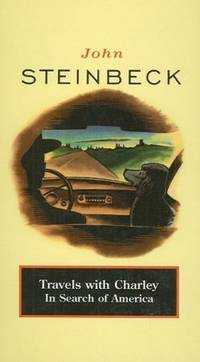
"Travels with Charley"

An early example of the Great
American Roadtrip genre

"Travels with Charley" would be John Steinbeck's Great American Roadtrip novel, except that it's nonfiction. It recounts Steinbeck's adventures driving Rocinante, a pick-up-truck-camper-van hybrid named after Don Quixote's horse, around the country with his poodle Charley. His objective was simply to observe people living their lives and ruminate on what makes America tick.

I've included a few passages that struck me below.

Sunday, September 29, 2019

"Angela's Ashes"

Ireland but sepia


It took me about four months to read "Angela's Ashes" – averaging perhaps two chapters a week – not because it was incredibly long or I found it boring, but because parts of the book were so poignant or heart-wrenching I had to put it down for the day. A few details and thoughts below.

Sunday, March 17, 2019

"Bobos in Paradise"

Bobos = Bourgeois bohemians

I've been reading David Brooks's op-eds in the New York Times for years. He typically writes about society and politics and I find that his columns are sometimes insightful, sometimes scathing, sometimes on-point, and often thought-provoking. A couple of his books have been on my reading list for a while, and "Bobos in Paradise" is both the first he wrote and the first I finished.

The central premise of "Bobos" is that today's ruling elite consists of bourgeois bohemians who have synthesized the corporate culture of the 80s with the rebellious counter-culture of the 60s. Brooks walks us through some of the strange and amusing contradictions this has caused, and argues that many of today's mainstream values, such as the meritocratic ideal and self-expression, arose from this synthesis.

Some flavor quotes and my take below.

Friday, September 29, 2017

"Devil Take the Hindmost"

"This time is different!"

Edward Chancellor's "Devil Take the Hindmost" is an in-depth study of financial speculation and panics over the last 500 years. The book's 400-plus pages really drive home two messages:
  1. In the long run, greed is not good.
  2. This time may be different, but probably not in the ways we hope.