Curio (noun) a rare, unusual, or intriguing object

Monday, December 26, 2016

"The Boy who Harnessed the Wind"

And how!

"The Boy Who Harnessed the Wind" is the heartwarming autobiographical account of how William Kamkwamba used his incredible mechanical aptitude to help his Malawian village. After a severe drought and famine, William is forced to drop out of school because his family can't afford the year's school entrance fees. Anxious not to fall behind his friends, he studies independently in the local library, and one day discovers a physics textbook called "Using Energy." By studying the book's illustrations, he learns how wind turbines can generate electricity, and dreams of building a machine to bring light and running water to his village and provide food security for his family.

Sunday, November 27, 2016

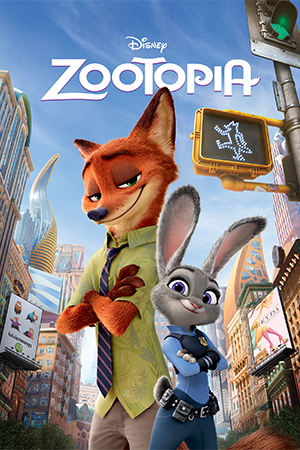
"Zootopia"

Partners in crime investigation

"Zootopia" is an anthropomorphic animal movie, but it goes beyond imbuing animals with human characteristics: the eponymous city itself reflects human society and many of its complexities.

For her entire life, heroine Judy Hopps has heard that "in Zootopia, anyone can be anything," and now she's determined to make the world a better place by becoming Zootopia's first rabbit police officer. When she joins the force, she soon learns that not everyone's on board with anyone being anything, and that she must overcome her own prejudices to forge a friendship with Nick the fox and crack a case that could change the city's future.

Minor spoilers below.

Wednesday, August 31, 2016

"Yesterday's Tomorrows: Past Visions of the American Future"

The 1930s future: so quaint!

Somehow, imagining a brighter future seems quintessentially American. "Yesterday's Tomorrows" explains the country's obsession with futurism not in terms of technology, but as an evolution of society itself. From the preface:
To imagine that the future will resurrect cherished values of the past has no doubt been comforting to modern Americans. If only the material world changes, leaving social arrangements intact, the prospect of technological innovation becomes less intimidating. Yet this may well be in illusion. Technology has historically been a catalyst of change, not a conserver of traditions or a refuge for established ways of life and thought. The visions of the future gathered here are of little interest as prophecies. As artifacts of culture and belief, however, these past visions of the future—testaments to the pervasiveness of this illusion of technological utopianism—are guideposts to a better understanding of our own future.
Reading "Yesterday's Tomorrows" is a bit like walking through a history museum: the curator's text guides interpretation, but it's up to the visitors to make up their own minds about the past.

Friday, August 19, 2016

"The Fifth Season"

Anagram: Eons shift aft, eh?

"The Fifth Season" is another of the books I discovered1 while reading the NYT series of mini-articles discussing prescient works of science fiction. The story is set in "The Stillness," an ironically-named world whose exceptional seismic activity regularly causes extinction-level events, known as fifth seasons: supervolcanoes, fissures across continents, sky-blotting clouds of ash, and so on. Jemisin explores the society that arose to cope with these fifth seasons and weaves the beginning of the worst fifth season yet into a very human story of striving and loss.

Minor spoilers below.

Saturday, August 6, 2016

Amateur electrician (half-)hour

A few days ago, my late-night reading session was disturbed by a very large, very loud Musca domestica flitting around the ceiling fan, determined to push its face all the way through the frosted glass of my new LED bulb to feast on its tasty electronic innards.

Bzzzzzzzzzz

Determined to take matters into my own hands, I grabbed a nearby handkerchief and began flailing wildly at the intruder. A few things happened at once:
  1. The fly escaped between the spinning blades of my ceiling fan (really);
  2. The handkerchief wrapped itself around the weighted end of the light's pull-chain;
  3. The light went out with a crack (and I put up a blackout curtain at night, so it was very dark);
  4. Something whizzed by my arm and crashed into the ground.

Wednesday, July 27, 2016

"The Little Book of Common Sense Investing"

By John Bogle, patron saint
of do-it-yourself investors

I have a lot of respect for Vanguard founder John Bogle. Unlike every other financial services company at the time, Vanguard was set up to operate at cost, rather than to extract profits from account holders to funnel to its executives and shareholders. Vanguard's customers are its owners; it's a mutually-owned mutual fund company. If Bogle hadn't given up ownership of Vanguard, he'd probably appear in every Forbes List of Very Rich People ever published, and the rest of us would be that much worse off in retirement.

"The Little Book of Common Sense Investing" details Bogle's philosophy when it comes to investing in the stock market. It boils down to a few simple ideas: in aggregate, investors are the market, so in aggregate we can't beat the market. Costs matter; the returns you get are exactly what you don't pay for. Diversify as much as possible. And you can't buy past performance1, so don't try to time the market!