Curio (noun) a rare, unusual, or intriguing object

Sunday, April 29, 2018

Opiod crisis, health care, false certainty


The New York Times published a thought-provoking article today about the opioid crisis and the healthcare industry's evolving response to it, but also about second chances and human nature.

Injecting Drugs Can Ruin a Heart. How Many Second Chances Should a User Get?
By Abby Goodnough, April 29, 2018

OAK RIDGE, Tenn. — Jerika Whitefield's memories of the infection that almost killed her are muddled, except for a few. Her young children peering at her in the hospital bed. Her stepfather wrapping her limp arms around the baby. Her whispered appeal to a skeptical nurse: "Please don't let me die. I promise, I won't ever do it again."

Ms. Whitefield, 28, had developed endocarditis, an infection of the heart valves caused by bacteria that entered her blood when she injected methamphetamine one morning in 2016. Doctors saved her life with open-heart surgery, but before operating, they gave her a jolting warning: If she continued shooting up and got reinfected, they would not operate again.

With meth resurgent and the opioid crisis showing no sign of abating, a growing number of people are getting endocarditis from injecting the drugs — sometimes repeatedly if they continue shooting up. Many are uninsured, and the care they need is expensive, intensive and often lasts months. All of this has doctors grappling with an ethically fraught question: Is a heart ever not worth fixing?
I highly recommend reading the full article. A few thoughts below.

Sunday, February 4, 2018

"Mr. Penumbra's 24-Hour Bookstore"

A book about our relationship with books

If Robin Sloan had asked me to write a person-quoted-on-cover blurb for "Mr. Penumbra's 24-Hour Bookstore" I'd probably have sent in something like:

"A highly enjoyable typesetting mystery romp!" —Paul Hively

No hard feelings for going with George Saunders's blurb instead.

Upon reflection, I think what the novel suggests about our relationship with books and technology is every bit as interesting as its plot. A bookstore that stays in business without customers; secret codes; missing artifacts; strange cultists; these may be fun, but anxiety over technology's role in transforming society is timely.

Friday, September 29, 2017

"Devil Take the Hindmost"

"This time is different!"

Edward Chancellor's "Devil Take the Hindmost" is an in-depth study of financial speculation and panics over the last 500 years. The book's 400-plus pages really drive home two messages:
  1. In the long run, greed is not good.
  2. This time may be different, but probably not in the ways we hope.

Saturday, July 15, 2017

"Till We Have Faces"

"Exerts, far beyond most novels,
that combination of ... wonder and
attraction." — The New York Times

C.S. Lewis's "Till We Have Faces" is a retelling of the myth of Cupid and Psyche, but while the original Roman myth depicts Psyche's fall, trials, and ultimate ascendance into godhood, C.S. Lewis's version describes her sister Orual's redemption from disbelief.

Sunday, June 18, 2017

A few thoughts on milestones

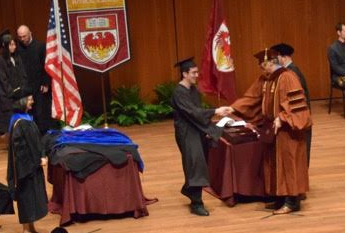
After three years of work, I completed my master's program and received my diploma at a nice ceremony last weekend. I enjoy graduations: the celebration, the sense of closure, the costumes, and the speakers, whose commentary adds a modern sensibility to old traditions.

Monday, December 26, 2016

"The Boy who Harnessed the Wind"

And how!

"The Boy Who Harnessed the Wind" is the heartwarming autobiographical account of how William Kamkwamba used his incredible mechanical aptitude to help his Malawian village. After a severe drought and famine, William is forced to drop out of school because his family can't afford the year's school entrance fees. Anxious not to fall behind his friends, he studies independently in the local library, and one day discovers a physics textbook called "Using Energy." By studying the book's illustrations, he learns how wind turbines can generate electricity, and dreams of building a machine to bring light and running water to his village and provide food security for his family.